
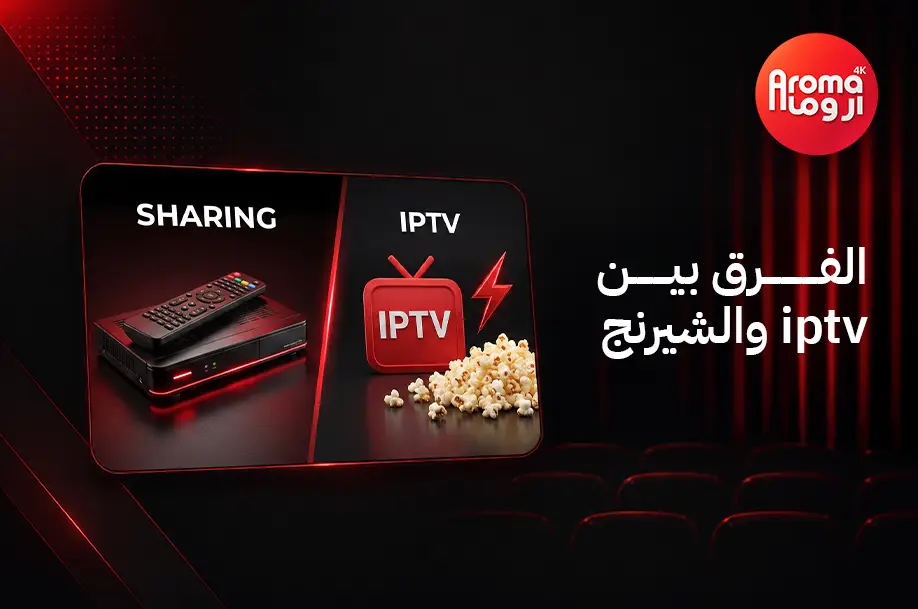
IPTV and satellite sharing services might seem similar at first glance, but the differences become apparent once you start using them. The method of operation, service requirements, cost, and viewing experience are all factors that influence your choice. Therefore, before making a final decision, it is worth understanding the difference between IPTV and sharing so you can choose the service that fits your needs and provides the best viewing experience.
In this guide, Smart Vision store explains the concept of both IPTV and sharing, the pros and cons of each option, and the criteria to help you make a decision that suits your needs and budget.
If you prefer solutions that rely on the internet without the need for additional equipment, it is best to check out Aroma TV packages, which offer flexible playback on various devices with a stable and easy-to-set-up viewing experience.
What is sharing? And how does it work?
It is a technology that allows a satellite receiver to decrypt certain channels by connecting to a dedicated server via the internet, while relying on a satellite dish to receive the signal. This system requires a receiver that supports sharing, as well as server connection details so the user can access the available channels.
What is IPTV? Learn about the technology that changed the way we watch TV
It is an abbreviation for Internet Protocol Television, a technology that allows you to watch TV channels and entertainment content over the internet instead of relying on satellite dishes or traditional cables.
If you want to learn about how streaming services work, you can check out the article ‘What is IPTV‘ to understand the concept more clearly.
Try streaming stability yourself
What distinguishes IPTV from sharing?
The features of IPTV are among the main reasons why many users have adopted it as an alternative to traditional viewing methods. Below are the most important advantages it offers:
- It relies on the internet to stream channels and entertainment content directly to the device.
- It provides access to live channels, movies, series, and on-demand content through a single subscription.
- IPTV can be played on smart TVs, TV boxes, smartphones, tablets, and computers.
- IPTV offers greater flexibility in watching content on different devices and from multiple locations.
IPTV vs Sharing: A comparison showing the key differences
To understand the difference between sharing and IPTV more clearly, the following table shows the most important differences between them:
Comparison Point |
IPTV |
Sharing |
| Method of operation | Relies on streaming content via the internet | Relies on decrypting satellite channels via the internet |
| Operational requirements | Internet connection and a compatible device or app | Sharing-compatible receiver, satellite dish, and internet connection |
| Content type | Live channels, movies, series, and on-demand content | Focuses on satellite channels available via the receiver |
| Supported devices | Smart TV, TV Box, phones, tablets, and computers | Receiver compatible with sharing |
| Ease of use | Direct playback via apps without the need for extra equipment | Requires setting up the receiver and connecting it to a satellite dish |
| Viewing flexibility | Can watch on more than one type of device | Viewing is limited to the receiver connected to the TV |
| Primary reliance | Internet | Internet with satellite broadcasting |
| Suitable for whom? | Those looking for a diverse and flexible viewing experience | Those who rely on a receiver and want to watch satellite channels |
This comparison shows that each technology relies on a different operating method, so the choice depends on the user’s needs and the devices they prefer to use.
IPTV or sharing: Which is more cost-effective?
When comparing the two options in terms of cost, you should look at all requirements, not just the subscription value, as shown in the following table:
Comparison Element |
IPTV technology |
Sharing |
| Subscription cost | Periodic subscription based on the chosen package | Periodic sharing subscription |
| Installation cost | Often does not require additional installation if a compatible device is available | May require installing a satellite dish and configuring the receiver |
| Potential additional costs | You may need a playback device if one is not available | May include purchasing or upgrading the receiver and maintaining reception equipment |
| Value for money | Provides channels and entertainment libraries within a single subscription | Focuses primarily on satellite channels |
The question of which is better, IPTV or sharing, is frequently asked by users regarding cost, though it varies from one user to another depending on the devices they have and their preferred usage method.
Make your decision: Which is better, IPTV or sharing?
There is no single answer that fits all users, because choosing the best service depends on how you use it, the devices you own, and the type of content you follow regularly.
IPTV might be suitable if you:
- Prefer to run the service on different devices.
- Are looking for an internet-based way to access content.
- Want to set up and run the service in simple steps.
Sharing might be suitable if you:
- Rely primarily on a traditional receiver.
- Prefer using a satellite channel reception system.
- Already own the equipment for the receiver and satellite dish.
How do you choose the right service?
Before making a subscription decision, it is best to consider several factors that will help you choose the most suitable service, including:
- Ensuring the service is compatible with the device you are using.
- Reviewing subscription details before purchasing.
- Choosing a provider that offers clear information and user support.
- Comparing the benefits offered by each service according to your needs.
If you are looking for options tailored for users within the Kingdom, you can also learn about the best IPTV subscription in Saudi Arabia and compare available packages before making your decision.
If you are thinking about switching from sharing to IPTV, Aroma offers various subscription options that suit different uses, with support to help you choose the right package.
Try streaming stability yourself
Most Frequently Asked Questions
Can IPTV be used without a receiver?
Yes, IPTV services work on devices that support compatible apps.
Can you switch from sharing to IPTV easily?
Yes, you can switch to IPTV after choosing a suitable service provider, installing a compatible app on the device used, and then entering the subscription details.
Can IPTV be played directly on a smart TV?
Yes, most smart TVs support IPTV apps, and the service can be played after installing a compatible app and entering the subscription details.
Does the IPTV setup method differ from sharing?
Yes, each service has its own setup steps; IPTV relies on an app and subscription details, while sharing requires specific settings for the receiver and connection to the service server.
Make your decision and start watching now!
In the end, understanding the difference between IPTV and sharing helps you choose the service that aligns with your needs and usage habits, as each option has its own features and operational requirements that suit a different category of users. When you define your priorities, making a subscription decision becomes easier and more confident.
If you have any inquiries about IPTV subscriptions or would like to know the most suitable subscription for you, you can contact the Aroma store team via WhatsApp, where you will receive assistance and answers to all your questions before completing the subscription process.